
We grew up hearing that the internet is forever. That once something lands online, it’s archived, immortal, available to anyone anywhere at any time.
How naive.
The truth is the internet is one of the most fragile storage media humanity has ever built. Links break. Servers die. Services shut down. A hard drive gets encrypted and nobody remembers the password. And now, with generative AI on the rise, there’s a new phenomenon: history being actively rewritten to feed content farms.
It’s not just losing the past through neglect. It’s watching the past get buried under a pile of generic text that only exists to steal clicks.
And I’m watching it happen live to a blog I used to follow.
Why So Japan
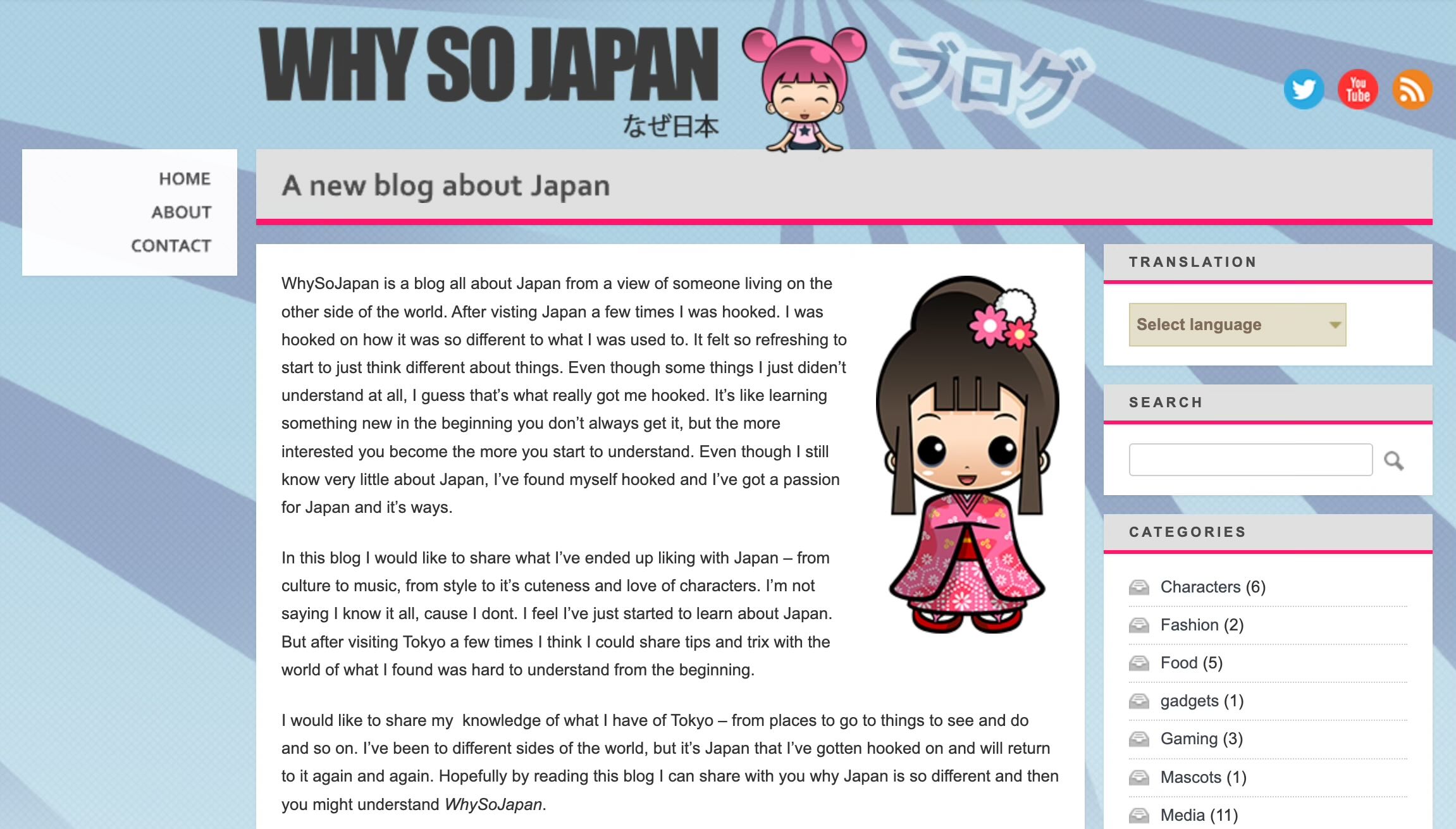
Between 2013 and 2017, give or take, I was a regular reader of a blog called Why So Japan. The name said it all: people writing about Japan from visits, from fandom, from a very personal point of view. It wasn’t a big blog. It didn’t go viral. It had no fame. It had personality.
The About page was deliberately vague: someone on “the other side of the world,” hooked on Japan after a few trips to Tokyo, wanting to share what they were figuring out. No real bio. No profile photo trying to sell authority. Just the blog and the posts.
From the names on the bylines, and the plural tone, it felt like a couple behind it. Trips for two, a shared obsession, that kind of blog where people run the project together. There was no way to confirm it, and there was no need to. One of the names sounded masculine; the rest we left alone. They weren’t expats building an influencer persona in Tokyo. They were travelers documenting what they liked, from the outside.
That was exactly what made it fascinating. There were real people there, and the only thing you knew about them was what they chose to write. The blog never asked to be read like a dossier. It was just a corner of the internet about Japan.
The first post is still on the Wayback Machine: A New Blog About Japan , from March 2013. A simple, modest statement of intent. And a very practical piece, typical of the era: Internet While on Holiday in Japan , about renting a 3G modem instead of fighting for a SIM card. Real traveler stuff, not an SEO guide.
The silence
The blog’s pace slowed down. In 2017 there was still a post now and then. The last piece the Wayback preserves on the old homepage is from January 2018 . No goodbye post. No “taking some time off.” It just stopped.
The project’s social accounts lasted a little longer. X/Twitter and Instagram still have 2018 posts echoing what the blog did: photos, trips, the everyday of that Japan fixation. Then silence there too.
And here came the uncomfortable part, at least in my head as a reader: with that level of distance, if the people writing had simply vanished, how would I know? No full name easy to look up. No newsletter with a footnote. The blog existed while someone published, and when it stopped, the presence evaporated.
Over time the story got less tragic and more ordinary. Projects stop. People move on. Sometimes it’s just fatigue, a change in priorities, a hosting bill that stops being worth it. The internet is full of things that die without a funeral, and in most cases a funeral would be overkill.
The site stayed up for a while. At some point, though, what was left was a shell. In January 2022 , the Wayback captured a weird homepage: broken title, almost no layout, just a few “Read more” links pointing at old posts. A WordPress install that clearly wasn’t being taken care of. A ghost of itself.
And then the domain changed hands, purpose, or both.
The rewrite
Today, anyone who visits whysojapan.com finds something else. A generic “ultimate guide” to tourism in Japan: food, life in Japan, useful translations, “plan your trip,” the full package of a site built to rank. Text with no smell of real experience. Titles that look pulled from a keyword list. Classic content farm structure.
The About Us page presents a “team” with symmetrical bios of people who fell in love with Japan on their first trip and now want to help you not miss anything. The names sound made up. The profile photos look AI-generated. The tone is a marketing brief, not someone writing about a 3G modem and what they saw on the street.
Someone took a domain with history, a bit of domain authority, and a name that works for search, and turned what used to be an authentic record of a human obsession into another text shop in the internet mall. From Wayback captures, the turn toward the “ultimate guide” site already shows up through 2023. By 2024 the package is fully cooked.
The weirdest part? The old social accounts are still standing. X/Twitter and Instagram still carry the avatar and posts from the real era. The new site benefits from the @whysojapan handle. So you can click “follow us” on the AI site and land on 2015 posts from people who were actually there.
Past and present collide on an Instagram profile page.
What we lose
Before generative AI, digital content loss was, most of the time, neglect or lack of resources. A server that shuts down. A domain that doesn’t get renewed. A blogger who gets tired and walks away. Sad, but passive.
Now there’s an active component. An abandoned domain doesn’t just sit in limbo: it becomes a content farm. What used to be a piece of someone’s history starts pushing affiliate links and 2,000-word articles about “what is hanami.” The original record doesn’t need to be deleted. It just needs to be buried. If you don’t know how to use the Wayback Machine, you’ll never know something else was there.
Digital history isn’t only being forgotten. It’s being rewritten by people with access to an LLM and a credit card to renew a domain.
And the worst part is this is only getting started. In a few years, it will be harder and harder to tell what was real and what was generated. What was actual people sharing a life, and what is a digital ghost producing text around the clock. The original Why So Japan may have stopped without an announcement. The domain is still very much alive, pretending to be continuous.
I remembered this blog while planning my next trip. I went to see what was left, and what I found made me a little sad. It wasn’t just a dead site: it was the address occupied by something else, pretending to be continuous. That was what pulled me into the archive, comparing captures, following the domain trail. And it turned into this somewhat bitter report on the state of the internet: the past doesn’t need to be deleted to disappear. It just needs to be rewritten.